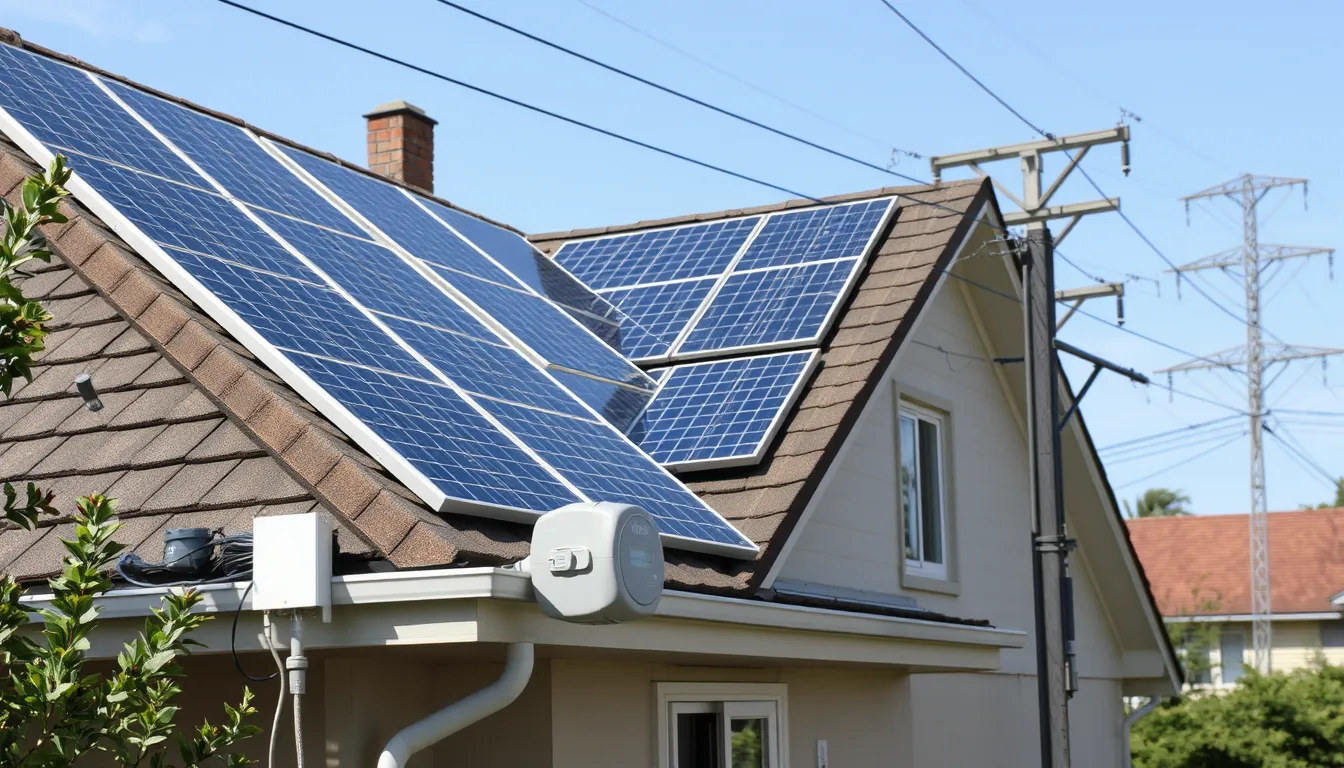
If you are weighing the cost of a grid-tied system against your current utility bill, simple price tags often mislead. This guide provides a practical framework to evaluate solar panels vs. grid electricity by looking beyond immediate expenses. You will learn how to assess long-term financial exposure, understand the impact of net metering policies, and determine if battery storage adds necessary value. Instead of vague promises, this breakdown focuses on reliability, maintenance realities, and the true levelized cost of energy. Use these specific comparisons to decide if transitioning away from the local grid aligns with your practical needs and financial goals.
Understanding the Core Difference: Generation vs. Purchase
Grid electricity functions as a purchased commodity. You pay a variable rate for every unit consumed, meaning your monthly utility bill fluctuates based on usage and utility pricing adjustments. This creates a pure operational expense structure where you have no ownership of the infrastructure delivering that power.
Solar panels operate as a capital asset. The primary financial outlay is upfront, covering equipment and installation. Once installed, the system generates its own power, shifting the cost structure from ongoing operational variables to a fixed initial investment plus minimal maintenance. You are no longer buying energy at retail prices; you are utilizing a self-sustaining generation source.
Most residential installations are grid-tied systems. This configuration does not mean independence from the utility company. Instead, it establishes a symbiotic relationship. The grid remains essential for two critical functions:
* **Backup Power:** If your solar production falls short of demand, the grid supplies the deficit.
* **Excess Export:** When production exceeds consumption, the surplus is sent back to the grid.
This interconnection allows homeowners to leverage net metering, where the utility credits the value of excess power. However, the fundamental distinction remains: one model relies entirely on external supply, while the other blends self-generation with grid dependence for stability and financial offset.
Financial Comparison: Upfront Costs vs. Long-Term Savings
Installing a grid‑tied system requires an upfront outlay for panels, inverter, mounting hardware, and professional labor. These costs are paid once, often with financing. Relying only on the utility grid means no initial expense; the customer simply signs up for service.
Monthly bills differ. Grid electricity is a variable cost that can rise with rate hikes tied to fuel and regulation changes. Solar panels generate power at no marginal cost, so the monthly utility charge falls to cover only deficits or battery use, creating a predictable, lower bill.
The payback period is the time savings on the utility bill equal the initial investment. It hinges on local rates, system size, and incentives such as tax credits or rebates. Higher rates or larger arrays shorten the period; generous incentives accelerate it.
Solar converts a fluctuating expense into a fixed asset, reducing long‑term financial exposure. Once the payback window passes, the system delivers free power, and any surplus can be exported to the grid under net metering, providing an additional revenue stream.
Reliability and Outage Resilience
When evaluating solar panels vs. grid electricity, resilience during outages is a critical differentiator. A standard grid-tied system includes a safety mechanism that automatically disconnects from the house when the utility power fails. This prevents dangerous back-flowing electricity into damaged lines, protecting lineworkers. Consequently, a solar array without a battery storage system provides zero backup power during a blackout, regardless of how much sun is shining.
To achieve true energy independence, you must add a battery storage unit. This component allows the system to draw power from stored energy when the grid goes down. However, batteries significantly increase the initial investment and add another layer of maintenance. They also have a finite lifespan, requiring eventual replacement, which impacts the levelized cost of energy over time.
In contrast, the local utility grid is designed for high availability, distributing load across multiple sources. Yet, it remains vulnerable to severe weather, aging infrastructure, and localized failures. If your primary concern is uninterrupted power, relying solely on the grid leaves you exposed. Solar with batteries offers a self-contained backup, but it is an expensive premium. You must weigh the high cost of this resilience against the risk of grid instability in your specific area.
Maintenance and Longevity Considerations
The maintenance burden differs fundamentally between the two options. Grid electricity requires zero upkeep from the user; the utility manages all infrastructure, repairs, and upgrades. In contrast, a grid-tied solar system demands periodic attention. Panels generally last over twenty-five years, but the inverter typically needs replacement every ten to fifteen years. This component failure is a significant long-term cost to budget for, distinct from the initial installation.
Weather impacts performance differently for each source. While the grid delivers consistent voltage regardless of conditions, solar output fluctuates with clouds, snow, or dust accumulation. Regular cleaning is often necessary to maintain optimal efficiency, especially in arid or high-pollen environments. Although solar systems have fewer moving parts than traditional backup generators, they remain exposed to environmental wear, including hail damage or thermal stress.
Assessing long-term financial exposure requires looking beyond the utility bill. You must account for the inevitable inverter replacement and potential panel degradation. Since the utility handles its own infrastructure costs, your financial risk is limited to the monthly charge. With solar, you own the asset and its associated lifecycle costs. This shift from renting power to owning generation changes how you calculate the levelized cost of energy over decades.
The Role of Net Metering and Utility Policies
The financial interaction between solar and the grid hinges on net metering. This mechanism allows homeowners to send excess solar power back to the utility grid, receiving credits that offset future electricity costs. Essentially, the utility meter runs backward when your system produces more than you consume. These credits directly reduce your utility bill, making the system more economically viable.
However, the value of these credits is not static. It depends entirely on local utility policies, which are subject to regulatory change. If a utility lowers the export rate or eliminates net metering, the financial return on your solar investment decreases significantly. You may end up selling power at a lower value than you pay to buy it, or receiving no credit at all. This creates a dependency on regulatory stability that is outside your control.
Before installing a grid-tied system, you must scrutinize your local utility’s current agreements and historical policy changes. Look for long-term guarantees or caps on rate adjustments. Ignoring these details can turn a projected savings plan into a financial liability. Understanding the specific terms of your service area is critical to accurately calculating the long-term savings and ensuring the system meets your financial goals.
Making the Right Choice for Your Situation
The right choice depends on your specific financial and lifestyle constraints. Solar panels typically offer the strongest return for homeowners with high current utility bills, adequate unshaded roof space, and a long-term plan to remain in the property. Conversely, relying solely on grid electricity often makes more sense for renters, individuals with short-term housing plans, or those living in regions where baseline electricity rates are already very low.
To determine if solar is viable for you, calculate your specific payback period. Compare the total installed cost of a grid-tied system against your projected annual savings on your utility bill. Include potential revenue from net metering credits in this calculation. If the time required to recoup your upfront investment exceeds how long you intend to stay in the home, the financial logic weakens significantly.
Ultimately, this decision is not binary. Many homeowners adopt a hybrid approach, using solar to offset peak usage while remaining connected to the grid for backup. This strategy balances energy independence with reliability. By evaluating your local utility policies, maintenance commitments, and personal timeline, you can decide whether generating power offers a better long-term financial exposure than simply purchasing it.